


There was a joke that used to do the rounds in recruitment circles: Q: “What do you call a recruitment consultant who doesn’t always negotiate the best salary?” A: “An ex-recruitment consultant.” And there was some truth in that. Ambitious people have always worked hard and wanted to be rewarded. A new job created an opportunity to push those rewards higher. And ‘rewards’ remained a euphemism for ‘money’. The time of maximum opportunity for candidates is, of course, when client demand exceeds supply. Which is where we find ourselves in so many sectors right now. The reasons for this are unsurprising: Financially secure companies that implemented freezes during lockdown are now hiring again Markets that slowed during the pandemic are picking-up With the dynamic shifting in favour of the candidate, we’ve witnessed some unusual events recently: Candidates have been taking interviews with multiple job offers with other firms already on the table. b The speed of the recruitment process has accelerated. A law firm we work with, and which typically meets candidates on a number of occasions, has recently made an offer after a single interview on Zoom. Clients engaging in long processes are losing candidates. One of our most experienced recruiters has said that she has never known so many candidates hold-off sending CVs to great businesses looking to recruit simply because they have already received so much interest in hiring them. And all evidence suggests that this is just the start, with international travel still limited and some furlough schemes still in operation. In this environment, it would be very easy for us to rub our hands gleefully and encourage clients to pay record-breaking salaries to secure their hires as quickly as possible. Our view, however, is different. If there’s one thing the pandemic has taught us, it’s that there is more to life than a paycheque. We have spent huge periods of time unable to socialise or to go to work. We’ve had significant barriers drawn around our personal freedom, which has given many of us a chance to reassess our priorities. And for many people, the outcome of Covid will be to reassess their priorities. Some want to spend more time at home. Others wish to adjust their work/life balance. Many want to pursue dreams that they hadn’t previously considered viable in the ‘old’ world of 2019. So although we will always ensure that clients are offering fair remuneration, we are encouraging clients and candidates to seek the right cultural fit. Some companies are already changing working patterns and offering a four and a half-day week ending at Friday lunchtime. Others are pushing their passion for sustainability, developing relationships with other businesses who share their primary goal of making the world a greener, cleaner place. One of our clients is throwing itself into supporting the local community, encouraging staff to spend half a day each week working at local schools or on community projects. Another has a ‘bring your dog to work day’! These are not opportunistic announcements. I believe they are symbolic of our times. Never before has it been more important for firms to walk the walk and demonstrate that their brand reflects their culture. And in that spirit, with demand for good candidates growing, there’s never been a better opportunity for people to find a place to work that reflects their priorities and worldview. So our advice to clients who are desperate to recruit new people is to sell your culture as well as your pay structure. Recruiting like-minded people is the key to developing a stronger brand for your team and your clients. As for candidates, it’s completely natural to look for a well-paid role. But we believe there’s more to life than that. And on the basis that work takes up a huge proportion of your waking life, please don’t forget that the people you work with and the environment your work within will have a huge impact on your wellbeing long after the initial thrill of your new salary has sunk-in!
A long time ago two of my friends started talking about global warming. It was an interesting chat that moved between the cause of forest fires in Australia, the floods in the UK and what, if anything, the government could do about it all. I listened for a while and then asked what they knew about the European Green Deal and the impact that the circular economy in the worlds of agriculture, energy and beyond could have on the climate. One of my friends looked at me in surprise and said “I didn’t know you’d ever worked in that area”. That’s the thing about recruitment. On a really superficial level, it’s just about putting people in touch with each other. But to do that well, you really need to understand the world they work in and its future trends. And in the world of Agri, it’s impossible to place people effectively without a clear insight into the ever-more important role of sustainability. The context is startling. For a century, the majority of manufactured fertiliser products are still based on mineral deposits and fossil fuels. This means that helping crops grow is, simultaneously, raising emission levels. The European Commission, which is ahead of the game in this area, has set a goal of a 30% reduction of non-renewable resources in fertilizer production. The aim is to turn this goal into a series of business opportunities (in the same way that the automotive industry will benefit from the switch to electric cars) So the Agri industry has a huge incentive to fight climate change by regenerating and restoring, aiming to keep resources in circulation for as long as possible. The quest is for a ‘Circular Economy’ which, effectively, is a perfect circle of recycling, where the agricultural system becomes emissions-free. And, backed-up by incentives, it’s working. Bio-waste management is an entire sector focused on replacing chemical fertilizers with bio-based products. Nutrients are being recycled back into the soil. Lime, limestone and dolomite are amongst the natural minerals being used in agriculture and forestry to correct soil acidity and to add nutrients that contain magnesium and calcium. Some of the innovative thinking in this area is really inspiring. Much of the CO2 being produced by the mineral fertilizer industry is being purified and sold for use in sparkling water and in cleaning products. From my perspective, what’s particularly interesting is that agri-related innovation isn’t just taking place inside the industry. Increasingly, sectors are overlapping, swapping ideas and raw materials in their quest to create a wider ‘circle’. For example, the EU’s fertiliser industry is now using over five million tonnes of sulphur annually that is sourced from waste at oil and gas refineries. Ductor, a Finnish-Swiss biotechnology company, is a great case study for this increasing breadth of thinking. Ductor is managing organic waste and produces sustainable, organic fertilizers and has many projects in North America and Europe. In addition to focusing on the 4 Rs that is often referred to by the fertilizer industry it also focuses on two more Rs; Recycling nutrients and Rejuvenating the soils. Ductor can use high nitrogen waste streams like Chicken Litter, and its projects in Norway focuses on the use of fish waste and fish sludge to produce biomethane, organic nitrogen liquids and NPKs, specifically positioned to enhance soil health and fertility. Ductor is able to demonstrate the new circular economy in practice and has a simple, practical solution that will help to significantly reduce greenhouse gas emissions. The transition to sustainable agriculture is driven by new technologies, research and innovation. This quest for a cleaner, greener planet is touching the entire industrial value chain, from production to consumption, remanufacturing, waste management and secondary raw materials. This ‘new agriculture’ will not only slow down climate change but also provide sustainable economic rewards. Which brings me back to my friends. I may never have worked in Agri, but it’s impossible to find creative answers to recruitment challenges unless you are fascinated in the industry that is recruiting. It might be that the perfect candidate for a role in Agri is currently working in the oil industry, in the same way, that there are natural synergies between the worlds of limestone and car battery production. The Circular Economy is only one (fascinating) part of Agri. We also recruit across commodities, trading, operations and production. Please do connect to share your own ideas and to discuss how we might be able to help. Rebecca Topping

I’m sure I wasn’t alone in watching open-mouthed as Italy’s Lamont Marcell Jacobs won the Olympic 100 meters in Tokyo. And not just because he was the first European to do so since 1992. What was even more surprising was that four years ago, Jacobs was a long-jumper. Realising that his run-up was more powerful than his jumping, he decided to switch to the track. And within four years his fellow-athletes were shocked too. If you love the Olympics, you may remember Rebecca Romero, a gold medal winning track cyclist in Rio. It was quite some achievement, particularly when she had switched from rowing! Romero was lauded for her ability to cross disciplines so smoothly, but perhaps we shouldn’t have been quite so astonished. Both sports require an ability to operate at the athlete’s aerobic capacity for long periods. One of the biggest barriers to success is the discomfort felt when exercising for long periods at their very max. Team GB saw that Romero has the core skills necessary to cycle fast. As a result they committed to helping her make the switch. Perhaps the most agile athlete of them all was American track and field star Lauryn Williams. In 2004 she won a silver medal in the 100 meters in Athens. Eight years later she took-home gold in the sprint relay in London. Injury then appeared to have put paid to her Olympic career. Williams had other ideas. She analysed the qualities required for different disciplines that would put less stress on her injury. The result was to switch from the summer to the winter games. And at the 2014 Winter Olympics in Sochi, Williams took silver with Elana Meyers in the two-woman bobsleigh race. In two years she had transformed herself from track athlete to ice queen. What all of these Olympians have in common is their agility. They analysed their strengths and potential, and then adapted successfully to a new discipline. For me, they aren’t just inspiring human stories, but they offer practical benefits for the world of recruitment. It is so easy to recruit someone who has done that job before in another organisation. You know what you’re getting. You remove risk from the equation. You take the ‘safe’ option. But there’s also a more creative approach. A more agile, creative way of finding great candidates by looking at their core strengths and adapting them to new opportunities and sectors. And it’s an approach we’ve been honing for some time. We helped a brilliant candidate with a background in commercial construction switch to data centre management. His brilliant, transferable leadership skills were equally relevant in both sectors and we were confident he could quickly pick-up the technical side. He has settled brilliantly into the role and now adds ‘data centres’ to his CV! We’ve found equally adaptable candidates across food and nutrition and across the supply and demand sides in mining, minerals and materials. We recently helped an animal nutrition engineer into limestone and another from limestone into steel. Each of these appointments has added real energy and innovation to their new business. They may not have done the job before, but they bring with them a whole new take on the world and the ability to challenge sector norms. The result has been to take successful candidates out of one sector and to make them gold medal candidates in another. Human beings have so much untapped potential. As recruitment consultants, we see a crucial part of our job as to help untap it.

Samir is a phenomenal tech analyst with excellent communication skills. He’s bilingual and has worked in London, Dubai and New York. As you might expect, he’s not short of job offers. Two years ago, he was approached by a number of agencies trying to place him in international roles. Samir was willing to relocate. He knew that wherever he ended up, he’d spend five days each week in a modern, impersonal office block. His office, its desk space and even its meeting rooms would be almost indistinguishable. That was pre-pandemic. As a potential employer, things are a little less clear now. ‘Agility’ is key – with Samir keen to embrace a way of life that doesn’t oblige him to spend his entire working week at the same desk in the same office. He can back this up with numbers as he just beat his 2020 target by 30% despite sending the entire year working from his kitchen! So how will employers who, understandably, want their office to remain a beating heart for their business, encourage Samir to take-on the commute and spend time with the team? At Walker Lovell we spend much of the working week chatting. To our clients. To candidates. To industry experts. And to each other. It’s how we do the vast majority of our research and how we judge which way the recruitment wind will blow next week and next year. Right now, the short-term focus is all about the return to ‘normal’ life. What will businesses demand from their teams? What will employees expect? Will vaccine passports provide a pathway to safe business travel? When will relocations begin again in earnests? But our take on things is that these are relatively superficial changes. The pandemic will, hopefully, move on. But it’s impact on our lives is altogether more permanent. We believe that the gradual changes to working life that embraced ‘dress down Fridays’ and ‘flexi-working’ have fast forwarded. The balance between work and life has never been more topical. And yet, as employers, we want our teams to be together. We want assurance. We want certainty about where our people are and what they are doing. We want to create a team spirit and a creative hub that just isn’t the same on a Zoom call. Our view is that the answer is in a company’s culture. Mental health has never been this crucial to the choices employees are making. We see candidates looking beyond job title and salary and citing ‘happiness’ as their key professional driver. This was already happening pre-Covid, but 2020 has accelerated the understanding of what’s possible and what’s aspirational. For us, this means challenging the core assumption that coming to the office is a grind. Rather than asking ‘how much time does a happy employee spend at home?’ , we prefer to ask ‘how do we ensure that the office is a place where our people really want to be?’. We believe the answer is in company culture. In the creation of an environment that makes it fun to go to work. Where the boundaries between home and office begin to blur. At Walker Lovell, we have seen the extraordinary effect that an emphasis on fun can bring to work. Pre-pandemic, we shortened the team’s hours. We finished work at two pm on a Friday, inviting everyone to finish the week in the pub – always ending before the school run began. We preached a message that it wasn’t enough to be well rewarded for success; it was more important to have the time to enjoy those rewards. We ceased to celebrate individual success and started to mark the team’s achievements with group trips and activities. We did it because we, the founders, had previously worked for an appalling boss. We were unmotivated, deeply depressed, and, as a result, not as productive as we knew we should be. So we formed a company determined to be different. But not even we could have forecast the effect it would have. Recruitment is notorious for the speed at which its employees move around. Ours haven’t. It’s a career that doesn’t really require an office – in theory everything can be done online and meetings can take place in cafes and hotels. But our staff can’t wait to come back in. They say it’s because work is fun. We build teams around a very simple principle. If you wake up on a Monday morning and work seems like a drag, then it’s time to consider your future. We don’t want work to drag. Ever. Our culture doesn’t allow it. And we’re pretty certain that, in the ‘new normal’ companies who want someone of Samir’s character to come into the office every day will have to entice him there because, ultimately, it’s offers the sort of enjoyment and atmosphere that trumps anything he experiences when he works from home. Dan Topping dan@walkerlovell.com

We could have given this article a different sort of title. Something like ‘Check out our new website!’. But we hope that what we’ve really done is much more significant than introducing some nice new colours and words. As people we work with (or might work with at some point!), we assume you’d be wondering why, in the middle of a pandemic, at a time when the job market is changing like never before, we’d feel the need to spend time re-branding. Well, the simple truth that we felt our old website wasn’t doing us justice. It explained that we match candidates and clients. That we are growing. That we specialise in a number of sectors. And that we’d love you to call. Which was all well and good, but we sensed that if we’d removed the logo, you could have read through it without quite understanding what it is that makes us unique. So we sat down and discussed what makes us love it so much here. Why we feel Walker Lovell is so special. And why our clients and candidates use us again and again. We put all that in a list and tried to re-work our website to reflect those sentiments. As you can imagine, the list grew and grew. It began with our being a family business, understanding what a great work life balance really means, and how we balance our passion for our work with the importance of it not taking over our lives. But what stood out for us even more, are the relationships we have with our clients and candidates. We asked whether our passion, commitment and genuine understanding of highly technical businesses were coming across online. It won’t surprise you to hear that it wasn’t! So, instead of creating a site based on our self-perception, we created it around what we’ve been told, which comes down to a few absolutely key words (all quotes provided by people we work for): CANDOUR: “As a candidate working with Walker Lovell, you can expect frequent, clear and honest feedback throughout the process with staff who listen to your needs”. CREATIVITY: “They actively seek to understand both the written and unwritten requirements for a perfect fit, including culture” REASSURANCE: “Meghan takes the anxiety out of the process by giving timely updates and explaining in detail where each party is at.” PASSION: “Recruiters often come across too “sales-minded” and do not always demonstrate an interest to get to know the candidate. I suspect this is why Katie is so successful she puts her heart into her work.” EMPATHY: “I felt like you really took the time to understand me, my skills and experience and what motivates me. You boosted my confidence with your brilliant pep talks and helped me believe in myself. I can say with certainty that I would not be in this role without you, thank you!” KNOWLEDGE: “Klara has been an exceptional partner to us and the experience she delivers is similar to having your own in-house recruitment team.” EXCELLENCE: “Gemma is a pleasure to work with. Her approach resulted in an excellent candidate being hired into the team at the right price point.” Which, in short, is why we’ve relaunched. You’ll notice that every sector profile has been written by a member of our own team, so your relationship with us begins the moment you click this link . From our perspective, we now have a site that reflects how proud we are to work here, including a series of articles that reflect the level of thinking going on here every day. We are completely committed to getting recruitment just right, but Walker Lovell continues to be about more than just making professional connections. It’s about understanding, passion and perseverance. As one client put it recently: “The experience I had during a hiring process with Walker Lovell was completely different from dozens of my previous experiences: I thought all hiring processes were inhuman and candidates were treated like numbers. Megan conducted the process with joy and professionalism and I can say that the journey I had was pleasant and enjoyable.”
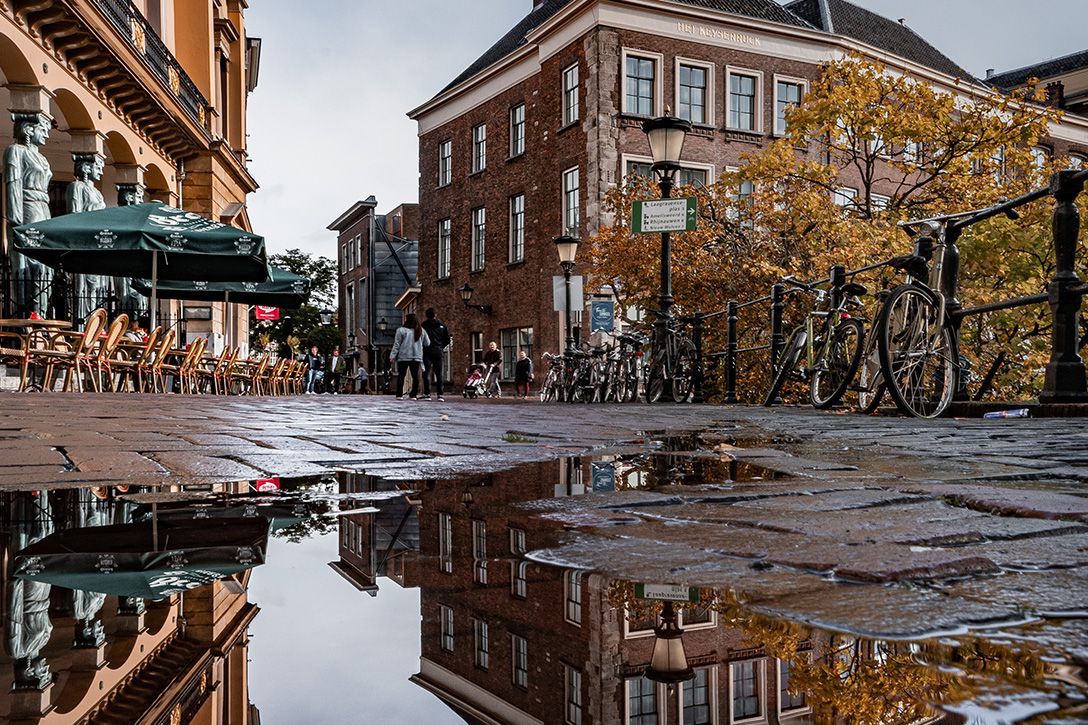
If you thought the prospect of working abroad had vanished for good, think again! For all the thought pieces suggesting that the office will soon be history and we will all be working remotely, we can confirm that the new normal will very much include office space, a certain amount of commuting and, yes, international vacancies to be filled. In fact, even though travel is still limited, we are already matching candidates with clients offering overseas opportunities in a wide range of sectors. What’s becoming clear is that the choice of location is more important to a candidate than ever before. Because there’s no doubt that even in many highly technical roles, the working week will become more flexible, there will be more opportunities to work away from site and, therefore, there will be more time for anyone moving country to absorb themselves in its culture. Fortunately, the 2021 Quality of Life Index calculates the very best places to live right now. Its scoring may appear rather too precise (!), but it certainly takes a full range of factors into consideration, from safety, healthcare, and pollution to the property price / income ratio and purchasing power. So if you’re looking to work somewhere clean, green and aspirational, here, in reverse order, are the top five: 5. Spain (Quality of Life rating 164.48) Its warm climate, wonderful cuisine and diverse culture are no secret; they are the reasons so many of us take holidays in Spain. From a professional perspective, there are a wealth of engineering and software-development roles in Madrid. Not to mention some great football teams. 4. United States of America (166.98) It’s no surprise that with a landmass twice the size of the EU, the USA offers a wealth of diverse opportunities in any sector you choose. From agricultural manufacturing in Iowa, manufacturing in Rust Belt, to the financial markets of San Francisco and New York, America has something for everyone. Whether you prefer skiing or snorkelling, literature or litigation there’s never any need to leave the country. And if you’re reading this, you don’t even need to learn a new language! 3. Germany (176.76) Germany has one of the lowest cost of living ratings in Central Europe and a warmer climate than you might expect. The scenery is stunning, there’s no speed limit on the autobahns and Berlin has become as diverse and culturally fascinating as any City on the planet. We’re currently recruiting for a number of management level positions across the country. 2. Netherlands (183.31) The Netherlands is renowned for offering a fantastic quality of life. With many of the same perks offered by Switzerland but a more competitive price of living, it’s wonderful for horticulturists and cyclists alike. It’s an easily navigable country offering easy access across Northern Europe, but its different Cities have distinct cultural difference. We have positions to fill from Amsterdam to Utrecht. 1. Switzerland (190.82) From Europe’s flattest country to its most undulating, Switzerland has it all. It’s safe, pollution levels are almost non-existent, it’s hot in summer and snowy every winter. It may be expensive, but it offers outstanding quality of life. We are recruiting for positions in beautiful Valais, home of the Matterhorn. Despite its extraordinarily detailed marking system, the Quality of Life Index has its flaws and we’d make arguments for Japan, Belgium, Singapore and the UAE being great places to live and work. Meanwhile, our team is based in the UK, where we couldn’t be happier despite an Index of rating of just 158.99!

“I think that working is part of life, I don’t know how to distinguish between the two.” Orson Welles This year of lockdown and restrictions around the world has had untold effects on every aspect of our lives. As recruiters, we have, of course, been focused on what impact those changes will have on the future. I’ve written recently , for example, about the return to the workplace, and the sense that the 9-5, five-day commute may never return in the way we knew it pre-pandemic. But I’m increasingly certain that the biggest change will be much harder to measure. COVID has, if nothing else, created time. With nowhere to go, be it to work, the pub, the cinema or the golf course, we’ve had time to reflect. And I have lost count of the numbers of conversations I’ve had with clients and candidates who have come to the conclusion that something needs to change in their lives. It’s not always a tangible thing like their salary, their time away from home or their job description. Nor is it like the usual list of New Year’s Resolutions, including weight loss and fitness gains. This time, it’s about happiness. Wellbeing is not a new idea, but in the non-stop world of successful professionals, it has tended to be something that fits-in around the working week. It might be a new app measuring steps, a commitment to healthier eating in the office, or even thirty minutes set-aside each day for meditation. All of these have a purpose, of course, but they are relatively superficial. Walking those steps may make us fitter and eating more salad may be healthier, but they are not attacking the deep-lying cause of many people’s unhappiness. True wellbeing requires us to think clearly and deeply about the fundamental pillars on which we build our lives, and to adapt the ones we feel aren’t working. And that includes our working lives. Everyone is familiar with the work / life balance, but it is based on an assumption: that ‘life’ is a good thing to be enjoyed away from ‘work’. But it really should be possible to blur that distinction. If you really enjoy work. If you get up in the morning raring to go. If you get on with your colleagues and spend time doing something that you find meaningful and stimulating, then the very word ‘work’ ceases to have negative connotations. And the result of all our lockdown thinking time is that an increasing number of people are coming to that realisation. Some want to retrain. Some want to take their existing skillset into a different industry and make a difference in a world they really care about. Some want to reorganise life completely to fit work around their real priorities – like family and hobbies – even if that means earning significantly less. As recruiters, it would be very easy to brush over these themes. It is, traditionally, in the recruiters’ interests to push for the move and make the deal happen! But that’s not how we do business. We built Walker Lovell with two aims in mind. One was to create a really great recruitment model. The other was to build a business based on family values (it helped that we were, initially, all related!) and give the sort of advice to our clients that we would give to other members of our own family. And that means balancing the benefits of a big career move against the impact it will have on their life more generally. Coca Cola’s former CEO Brian Dyson compared our lives to a juggling act where we try to keep five balls in the air simultaneously. Those five balls are our family, our health, our friends, our spirit and, yes, our work. He suggested that four of them are fragile and will break irreparably if we drop them. One is made of rubber. And that’s our work. We can get a new job, try a new career or reframe our professional ambitions. But there’s never a second chance to see our child’s school play or to reduce our stress levels and their impact on our blood pressure. As the world opens-up again after Covid there will be career opportunities aplenty. We’ll create short-lists of brilliant candidates for them all. But we’ll also work with them to ensure that they aren’t just taking the best role for their CV, but the best job for them and their loved ones. It doesn’t only need to be famous film producers who get to combine work and life and enjoy them both!

The drive towards genuinely diverse recruitment is, of course, as crucially important to our businesses as it is to society in general. How we get there is much less clear. Take Anita. She’s looking for a management role in renewable energy. She’s incredibly bright, self-made and a born innovator. She is of Afro-Caribbean descent and left school at 16. She spent six years working in a care home, climbing her way up to a management position. She then took a big leap into the corporate world and successfully applied for a job in energy. She worked in the sector for five years, earning rave reviews from her colleagues. She’s now returning from a period away from work. She took a two year career break when her baby was born, so this is a fresh start. Now take Ben. He runs the recruitment for a big company that develops solar energy solutions for clients around the world. He calls a recruitment agency and explains exactly what his requirements are for the role: “We want someone who is well qualified. They need five to ten years work experience, and they need to come from a management position in another international form.” Fair enough. We can do that. Then he adds “And we are absolutely committed to a more diverse workforce, so we’d like to speak to as many candidates from ethnic minorities, and also to as many females as possible.” He asks us to confirm that we have been trained in ways to avoid sub-conscious bias in our processes (which we have) and that we will ensure that all CVs are viewed ‘blind’ in the first instance (which we do). So we have no idea what the gender, age or name of any candidate might be. Our initial search brings up 5,000 names. As you would expect, we have a well-honed process to whittle this down. Eventually, we present Ben with twenty CVs. And after speaking to each of them, we find that none are from ethnic minorities. Only three are female. Which leaves Ben feeling frustrated. So is Anita. She’s not made the cut for a role for which she’d have been perfectly suited. You can see the problem. It’s no secret that 72% of all workers in the ‘baby boomer’ generation were white. Nor that a tiny 1.5 per cent of top management roles in the UK private sector are filled by black people. So if we stick to the traditional means of selecting a short-list, we will end up with a traditional list. Recruiting existing managers means we will end up with more of the same. Recruiting people without gaps on their CV rules out anyone who has taken a break from the workplace – which creates an instant bias against women. It’s the ultimate Catch 22. Companies understandably ask for ‘the best’. They also want diversity. Fortunately, we are yet to come across a business that doesn’t want to become more diverse. And yet getting there isn’t as simple as blinding a CV. Ironically, covering-up a name ensures that selection is based on criteria that can create a less diverse short-list. On the basis that greater diversity must be a given, there’s only one answer. And that’s a shift in the definition of ‘the best’. We believe it’s time to broaden that definition. ‘Best’ doesn’t have to equate to an Oxbridge degree, straight As at ‘A’ level or experience in a similar company carrying-out a similar role. These are narrow criteria and they don’t necessarily attract candidates who can offer something truly different. Candidates prepared to ask difficult questions; to challenge the status quo; to offer insights from a completely new perspective. If we always fish in the same water, we’ll always catch the same type of fish. The future of recruitment needs to be more diverse and that means fishing in new places and in new ways. Otherwise, Anita will never get the role she deserves, and Ben will continue to receive short-lists that don’t quite get his business where it needs to be.
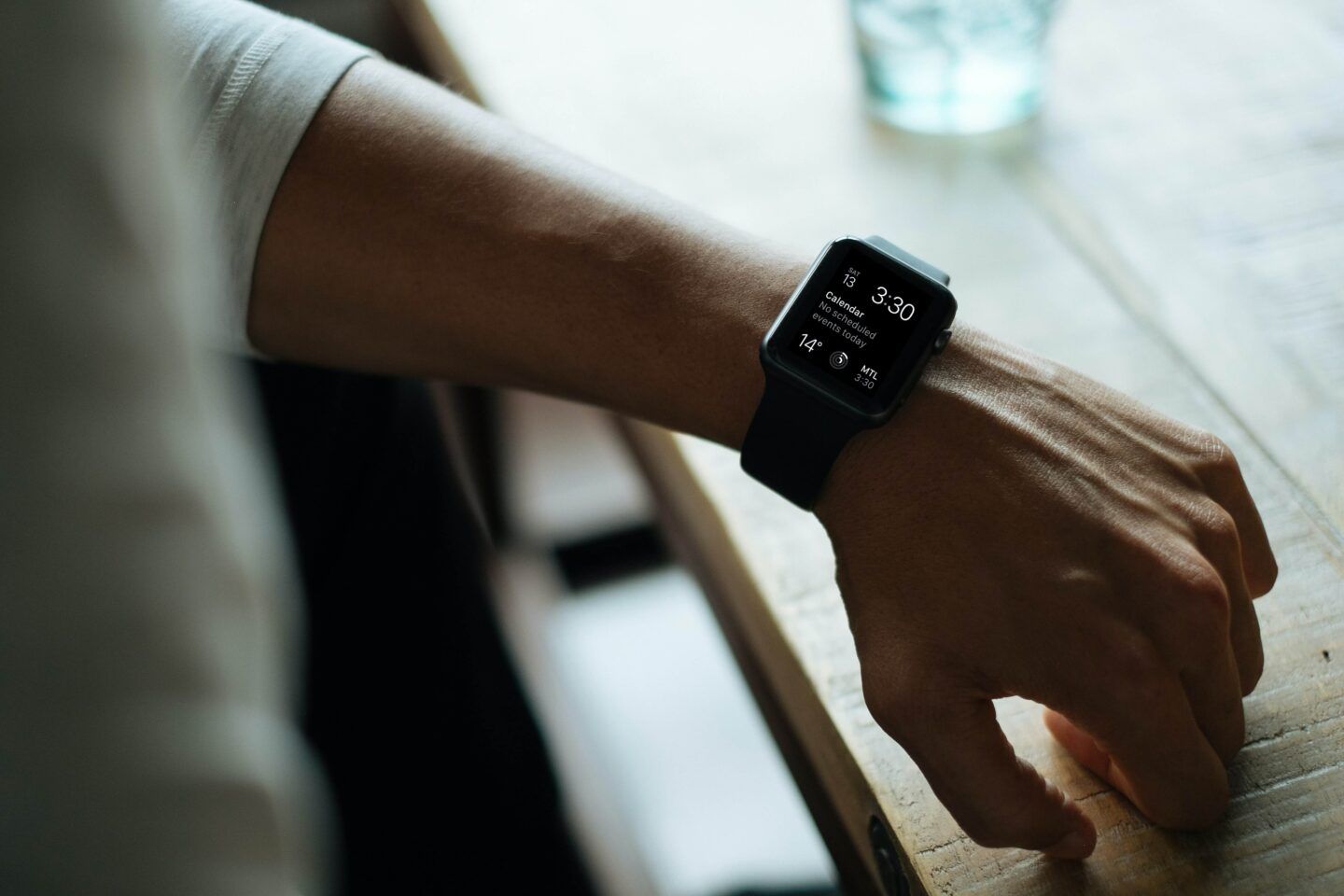
As lockdown ends, how can we make the office somewhere our people want to come and work? Samir is a phenomenal tech analyst with excellent communication skills. He’s bilingual and has worked in London, Dubai and New York. As you might expect, he’s not short of job offers. Two years ago, he was approached by a number of agencies trying to place him in international roles. Samir was willing to relocate. He knew that wherever he ended up, he’d spend five days each week in a modern, impersonal office block. His office, it’s desk space and even its meeting rooms would be almost indistinguishable. That was pre-pandemic. As a potential employer, things are a little less clear now. ‘Agility’ is key – with Samir keen to embrace a way of life that doesn’t oblige him to spend his entire working week at the same desk in the same office. He can back this up with numbers as he just beat his 2020 target by 30% despite sending the entire year working from his kitchen! So how will employers who, understandably, want their office to remain a beating heart for their business, encourage Samir to take-on the commute and spend time with the team? At Walker Lovell we spend much of the working week chatting. To our clients. To candidates. To industry experts. And to each other. It’s how we do the vast majority of our research and how we judge which way the recruitment wind will blow next week and next year. Right now, the short-term focus is all about the return to ‘normal’ life. When will offices reopen? Will vaccine passports provide a pathway to safe business travel? When will relocations begin again in earnests? But our take on things is that these are relatively superficial changes. The pandemic will, hopefully, move on. But it’s impact on our lives is altogether more permanent. We believe that the gradual changes to working life that embraced ‘dress down Fridays’ and ‘flexi-working’ have fast forwarded. The balance between work and life has never been more topical. And yet, as employers, we want our teams to be together. We want assurance. We want certainty about where our people are and what they are doing. We want to create a team spirit and a creative hub that just isn’t the same on a Zoom call. Our view is that the answer is in a company’s culture. Mental health has never been this crucial to the choices employees are making. We see candidates looking beyond job title and salary and citing ‘happiness’ as their key professional driver. This was already happening pre-Covid, but 2020 has accelerated the understanding of what’s possible and what’s aspirational. For us, this means challenging the core assumption that coming to the office is a grind. Rather than asking ‘how much time does a happy employee spend at home?’ , we prefer to ask ‘how do we ensure that the office is a place where our people really want to be?’ . We believe the answer is in company culture. In the creation of an environment that makes it fun to go to work. Where the boundaries between home and office begin to blur. At Walker Lovell, we have seen the extraordinary effect that an emphasis on fun can bring to work. Pre-pandemic, we shortened the team’s hours. We finished work at two pm on a Friday, inviting everyone to finish the week in the pub – always ending before the school run began. We preached a message that it wasn’t enough to be well rewarded for success; it was more important to have the time to enjoy those rewards. We ceased to celebrate individual success and started to mark the team’s achievements with group trips and activities. We did it because we, the founders, had previously worked for an appalling boss. We were unmotivated, deeply depressed, and, as a result, not as productive as we knew we should be. So we formed a company determined to be different. But not even we could have forecast the effect it would have. Recruitment is notorious for the speed at which its employees move around. Ours haven’t. It’s a career that doesn’t really require an office – in theory everything can be done online and meetings can take place in cafes and hotels. But our staff can’t wait to come back in. They say it’s because work is fun. We build teams around a very simple principle. If you wake up on a Monday morning and work seems like a drag, then it’s time to consider your future. We don’t want work to drag. Ever. Our culture doesn’t allow it. And we’re pretty certain that, in the ‘new normal’ companies who want someone of Samir’s character to come into the office every day will have to entice him there because, ultimately, it’s offers the sort of enjoyment and atmosphere that trumps anything he experiences when he works from home.